
Blog
Trauma and yoga
My friend and colleague Annabel McLisky teaches beautiful workshops on trauma sensitive yoga. After reading the ground breaking book ‘Overcoming Trauma Through Yoga‘, I attended one of Annabel’s workshops last year in Mullumbimby.
To me, this information is so important for anyone who goes to a yoga class and has had any kind of trauma in their life (and let’s face it, it’s not an uncommon experience), and also for yoga teachers, so they can best support their students, whether they know a student has experienced trauma or not.
So I’ve invited Annabel in to my virtual interview room, to ask her some questions about yoga and trauma.
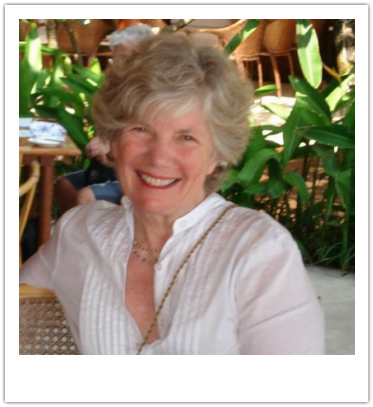
Lauren: Annabel, tell me a little about yourself.
Annabel: I completed my yoga teacher training with IYTA in Sydney in 1978, and taught there before moving to the north coast of NSW in 1981. I have taught yoga in this area ever since – currently at Temple Byron in Byron Bay.
In 1999 I encountered Dru Yoga and completed their first Australian teacher training. Since graduating I have been a senior tutor on Dru Yoga and Dru Meditation Teacher Training courses around Australia.
I am a psychologist in private practice in Bangalow, having studied psychology as a mature age student and doing my psychology internship at The Buttery, therapeutic community for drug and alcohol rehabilitation.
Last April I attended a 5 day training in Trauma Sensitive Yoga (TSY) with yoga teacher David Emerson, and trauma specialist psychologist Bessel van der Kolk at Kripalu, Massachusetts. Last August I presented a webinar for the Australian Psychological Society (APS) on TSY and presented a TSY workshop for yoga teachers in Mullumbimby in October last year with colleagues Shirley Hicks and Arthur Sharp.
You teach beautiful workshops for yoga teachers and health professionals on trauma sensitive yoga. What is trauma sensitive yoga? And how does it differ from ‘general’ yoga?
Trauma Sensitive Yoga (TSY) is a gentle form of body-focussed yoga set in a safe environment for people who have experienced trauma.
The principles of TSY are to give the student the opportunity to practice: being present (mindfulness), making choices, taking effective action, creating rhythms, sensing dynamics and discovering their spatial orientation.
It differs from ‘general’ yoga in that the language is invitational and one of enquiry, the teacher does not physically adjust (or touch) the students, the students are invited to experiment with the postures and make adjustments according to their individual needs. The aim of TSY is to empower the students by helping them to befriend their bodies.
What advice do you have for someone who has experienced trauma, and would like to join a yoga class, but may not have access to a specialised trauma sensitive yoga teacher?
I recommend that they be prepared to try several classes until they find a teacher and a class environment they feel safe with – one where they can start the process of becoming “embodied” by combining breath and movement in their own time and incorporating the TSY principles above. It is their choice whether they tell the teacher of their trauma.
What advice do you have for yoga teachers, who want to be sensitive to students in their class who may have experienced trauma?
Create a safe environment where each student is given choice whether to participate, modify or not practice any posture, with eyes open or closed and in their own time, where they know that their mat is a safe place to be, that they will not be touched or witness other students being touched. To use invitational language “when you’re ready”, “as you like”, and language of enquiry “experiment”, “notice”, “observe”, keeping language body based and focussing on present moment experience.
Why is yoga important for overcoming trauma?
In the words of Bessel van der Kolk:
“Yoga is part of the overall healing process. Being able to find the words that allow you to know what happened, and being able to place the memory in space and time, liberates a person from the tyranny of having to relive the trauma in the present. But only if the past can be remembered without the body being forced to relive what happened can one truly speak of recovery.”
And to cap it off, right now, in this moment, what are you grateful for?
I am grateful for the sun which is shining, the clear blue sky, for good health, for breath, for my husband, three children and granddaughter, for family, friends, students, clients, teachers, mentors, to live in the most beautiful part of this lucky country, for the ocean and beaches, the forests and green hills, for life! And for yoga, meditation and relaxation which sustain me, and for being able to share my passion with others.
Many thanks Annabel. I wish you all the best as you share this valuable work with yoga teachers and mental health professionals in Australia.
Annabel and her colleagues will be teaching a Trauma Sensitive Yoga workshop in Brisbane (Australia) for Yoga Teachers on Saturday, 4th May and in Sydney on Saturday, 10th August; and a TSY workshop for mental health clinicians in Brisbane on Sunday, 5th May and in Sydney on Sunday, 11th August. For more info visit www.traumasensitiveyogaaustralia.com.

3 Comments
Submit a Comment
WANT MORE LIKE THIS IN YOUR INBOX?

Mental Health and COVID-19
With much of the world going into lock down as a result of COVID-19, one of the biggest global health risks we’re facing right now is mental illness. Loneliness, as a result of social distancing, and stress as a result of the financial implications of lock down and health fears, are very...

Ahiṁsā (non-violence)
Let's dive into the Yoga Sūtras together. Patañjali’s Yoga Sūtras are an ancient yogic text, and a practical guide to self-understanding and enlightenment (as we saw in this article). They outline eight limbs for achieving the goal of yoga, including the yamas, niyamas, āsana, prāṇāyāma,...

Eight Limbs of Yoga
It is thought that Patañjali was an ancient sage who wrote down the vedic knowledge of the time into sūtras, so they could be handed down orally from teacher to student. These sūtras comprise of a series of experiments or practices that are designed to realise the teachings of Sāṅkhya, teachings...
This is a very good guide for people like me. I am thrilled to read this article and will look forward to see more from you.
I am so interested in this blog as my daughter and I have been reading Dr Bessel van der Kolk’s book The Body Keeps the Score.
– and can relate to it. Your blog makes sense. However we live in another regional centre and would be interested in how to access and get help from trauma sensitive yoga. Helena
Hi Helena, Bessel’s book is a great one! You could read a book by David Emerson called Trauma Sensitive Yoga, it’s a great one for students and teachers alike. And have a look on Annabel’s website for a list of trauma aware teachers: http://www.traumasensitiveyogaaustralia.com/trauma-aware-yoga-classes.html