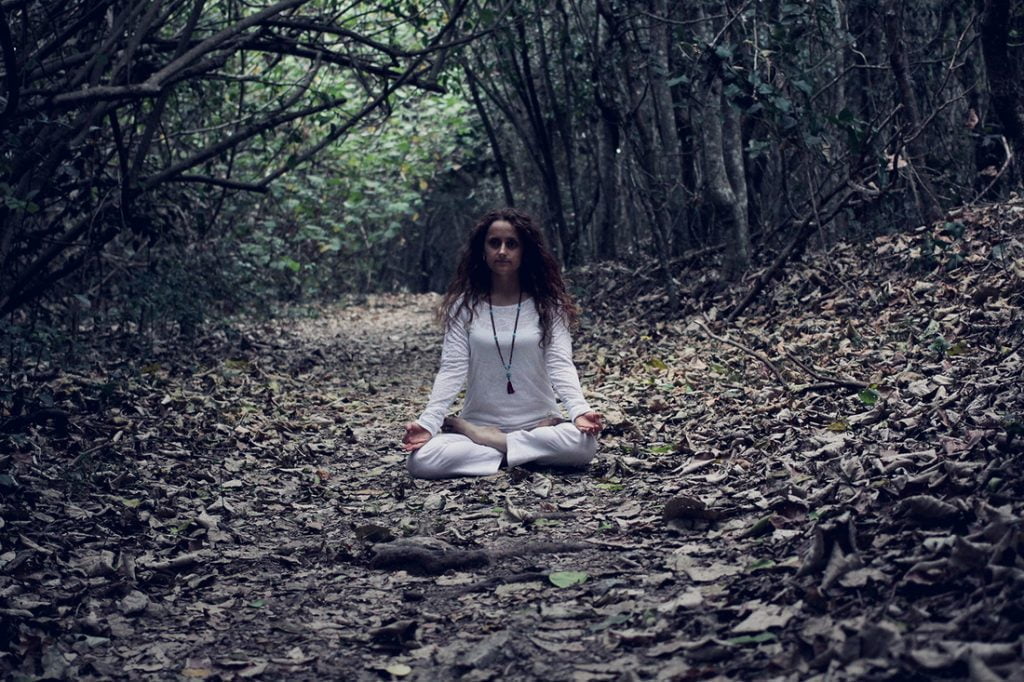
Yoga and the Highly Sensitive Person

Yoga and the Highly Sensitive Person

Blog

Yoga and the Highly Sensitive Person

I can’t help but feel that yoga was designed for (and by) Highly Sensitive People.  It’s the perfect tool for any HSP.

Highly sensitive people feel things more deeply than others.

We are often very creative and have a deep inner or spiritual life.  We feel others emotions and we’re not always sure how to cope with that.

Shopping centres can be a nightmare with the bright lights, the hustle and bustle and blaring music.  Sad movies (or even commercials) bring us to tears and any kind of drug, whether it’s coffee, chocolate, alcohol, illegal, herbal or prescription has a big effect on us.

Wondering if you’re a HSP?  Check my article on the Gifts and Challenges of the Highly Sensitive Person.

The nervous system of a highly sensitive person picks up on more information from the world than the nervous system of a non-sensitive person.  While this has some amazing benefits, it also means that we can become overwhelmed and overstimulated more easily than others.

I love being out and about in the world and connecting with others.

But I do feel the effects of it.

After a big day of engaging with others, my nervous system feels jangled.  Jazzed up.  Pulsating.  Even fried if I’ve really been over-doing it.

On days like these when I close my eyes and focus inwards, I can feel the energy pulsing throughout my entire body, like a strong and sparking electrical current.

I’ve learnt the hard way that pushing through this ends up with me feeling miserable and depleted.

Now days I stop, find somewhere quiet by myself and practice yoga.

I’m not talking about handstands or back bends.  I’m talking about the off-the-mat kind of yoga.  I’m talking about lying quietly on my bed and just noticing the pulsing of energy through my body.  I’m talking about iRest Yoga Nidra, mindful breathing and listening to soothing music.

It takes surprisingly little time to feel the benefits of the practices.  A few minutes of being with my experience just as it as, and some gentle mindful breathing can make the world of difference.  My nervous system starts to calm down and I feel more at peace with myself and the world.

I’ve been spending time in a recording studio in Byron Bay, recording yoga practices like these for A Daily Dose of Bliss.  And I’d love to share one of them with you now.

Here is Mindful Breathing, the very first track in A Daily Dose of Bliss.  Find yourself a comfortable position to sit or lie in for the next six and a half minutes, gather your beginner’s mind and press play.

Your nervous system will thank you for it.

If you’re a Highly Sensitive Person like me and would like to learn some simple yet powerful practices to calm your nervous system, do check out A Daily Dose of Bliss.

You’ll learn a new practice every day for 6 weeks, and it only takes 5-10 minutes each day.

I’d love to share it with you.

See you in the shala,

The information provided on this podcast is intended for informational purposes only and should not be considered professional advice

WANT MORE LIKE THIS IN YOUR INBOX?

[et_bloom_inline optin_id="optin_9"]
Mental Health and COVID-19

Mental Health and COVID-19

  With much of the world going into lock down as a result of COVID-19, one of the biggest global health risks we’re facing right now is mental illness. Loneliness, as a result of social distancing, and stress as a result of the financial implications of lock down and health fears, are very...

read more
Ahiṁsā (non-violence)

Ahiṁsā (non-violence)

  Let's dive into the Yoga Sūtras together. Patañjali’s Yoga Sūtras are an ancient yogic text, and a practical guide to self-understanding and enlightenment (as we saw in this article).  They outline eight limbs for achieving the goal of yoga, including the yamas, niyamas, āsana, prāṇāyāma,...

read more
Eight Limbs of Yoga

Eight Limbs of Yoga

It is thought that Patañjali was an ancient sage who wrote down the vedic knowledge of the time into sūtras, so they could be handed down orally from teacher to student. These sūtras comprise of a series of experiments or practices that are designed to realise the teachings of Sāṅkhya, teachings...

read more

Join our community over at the Yoga Psychology Institute and download my favourite Spotify playlist for nervous system regulation

The Highly Sensitive Parent

The Highly Sensitive Parent

Blog

The Highly Sensitive Parent

A few weeks ago I was invited onto BAY FM 99.9 on the Pregnancy, Birth and Beyond show to talk about parenting and the Highly Sensitive Person.  In the interview we talked about what it means to be a Highly Sensitive Person, and in particular the highs of lows of being a highly sensitive parent. HSPs make wonderful parents, they’re insightful and intuitive, but highly sensitive parents can often get overwhelmed by the chaos and intensity that comes with parenting. Take a listen to my interview to find out if you (or your partner) is a Highly Sensitive parent, and what you can do to support and nourish yourself if you are:
The interviewer, Annalee Atia and I are both Highly Sensitive People, and just loved getting together to chat about this very important topic.  Just minutes before the show started Annalee’s colleagues were called away, and for the very first time she had to conduct the interview AND press all the radio buttons to broadcast it to the world by herself (I was no help!). The interview was a success, but the recording was not!  So Annalee and I got together a week later in her beautiful home in Mullumbimby to re-record this interview, so we could share it with you.  I do hope you enjoy it. Are you a highly sensitive person?  You might be interested in my other articles on high sensitivity
  1. The Gifts & Challenges of the Highly Sensitive Person
  2. Anxiety + the Highly Sensitive Person.
With gratitude,

The information provided on this podcast is intended for informational purposes only and should not be considered professional advice

WANT MORE LIKE THIS IN YOUR INBOX?

[et_bloom_inline optin_id="optin_9"]
Mental Health and COVID-19

Mental Health and COVID-19

  With much of the world going into lock down as a result of COVID-19, one of the biggest global health risks we’re facing right now is mental illness. Loneliness, as a result of social distancing, and stress as a result of the financial implications of lock down and health fears, are very...

read more
Ahiṁsā (non-violence)

Ahiṁsā (non-violence)

  Let's dive into the Yoga Sūtras together. Patañjali’s Yoga Sūtras are an ancient yogic text, and a practical guide to self-understanding and enlightenment (as we saw in this article).  They outline eight limbs for achieving the goal of yoga, including the yamas, niyamas, āsana, prāṇāyāma,...

read more
Eight Limbs of Yoga

Eight Limbs of Yoga

It is thought that Patañjali was an ancient sage who wrote down the vedic knowledge of the time into sūtras, so they could be handed down orally from teacher to student. These sūtras comprise of a series of experiments or practices that are designed to realise the teachings of Sāṅkhya, teachings...

read more

Join our community over at the Yoga Psychology Institute and download my favourite Spotify playlist for nervous system regulation

Anxiety and the Highly Sensitive Person

Anxiety and the Highly Sensitive Person

Blog

Anxiety and the Highly Sensitive Person

Let me be really clear from the outset, high sensitivity is not an illness or a diagnosis.  It simply means that the nervous system is more sensitive than ‘normal’ and therefore picks up on more information from the world and processes it more deeply.

While a sensitive nervous system can have all sorts of benefits (like insight, intuition and empathy) it can also increases the likelihood of getting overwhelmed and overstimulated by the world.

Sometimes overstimulation or overwhelm is confused or mis-diagnosed as anxiety.  The somatic experience of overstimulation is very similar to the somatic experience of anxiety, so it’s understandable that this happens.  Both anxiety and overstimulation can include the heart beating faster, feeling faint, sweating, difficulty breathing, feeling strange or un-real, fear of going crazy or dying, the mind going blank, chest pain, feeling hot  or abdominal discomfort.

When a Highly Sensitive Person (HSP) confuses the experience of overstimulation as anxiety, it can become a self fulfilling prophecy, and they can begin to really feel anxious.  With ongoing mis-identification,  an anxiety disorder may develop.  If a therapist mis-diagnoses overstimulation as anxiety, therapy is likely to be less effective, and the HSP may be left with ongoing anxiety and a feeling of failure.

Overstimulation, if not understood, can also be a scary experience, and therefore overstimulation can also trigger anxiety.

If you suspect you might be a Highly Sensitive Person and you’re experiencing anxiety, I recommend doing these 3 things  :

  1. Learn all you can about high sensitivity
  2. Stop living like a non-sensitive person
  3. Learn emotion regulation practices to manage overstimulation and anxiety

Understanding high sensitivity, particularly your unique expression of this trait is vital.  I recommend taking this test and reading this book to get you started.

I can’t emphasise enough how important it is to stop living like a non-sensitive person, and start living in a way that honors and nourishes yourself.  HSPs often head into overstimulation as a result of cramming too much into one day, being in shopping centres, drinking coffee, constant exposure to loud noises and strong smells, being around toxic people and environments (emotional and chemical) and doing work or being in relationships that are not fulfilling.  HSPs often thrive when they have their own personal space to retreat to, pace themselves during the day, spend time with people they love and admire, practice yoga/meditation and acknowledge and appreciate the gift of their sensitivity.

Be the creator of your world, and reduce your exposure to situations that overwhelm you.  And when overwhelming situations are unavoidable, plan some down time in your day afterwards. Limiting your exposure is not avoidance (and a critical difference between the treatment for anxiety), it is a radical act of love and compassion.

Inevitably, Highly Sensitive People will experience overstimulation, overwhelm and anxiety (it’s just part of the experience of being human), and then it’s essential to be able to self regulate our emotions.  One very simple way is to take some down time.  Turn off your phone, lock the doors, and retreat to your bedroom for a few hours of peace and quiet.

Yoga offers some wonderful practices for self regulation, including meditation and breath work (pranayama) that helps a frazzled and overstimulated nervous system to calm down.  iRest Yoga Nidra, a deeply relaxing mindfulness mediation, is my favourite way of calming the nervous system.  You lie down, get really comfortable, and are guided through a gentle process of deep relaxation and simply being.  You can practice yoga nidra with me either in person, or by download a recording.  I’m also in the process of developing an iRest eCourse that will be available later in the year (so stay tuned).

Pranayama (breath work) is another beautiful way to calm the nervous system very quickly, and there’s some fantastic pranayama practices to help you do just this.  Abdominal breathing is a very simple and very effective way to calm the nervous system, and you can do this lying down, sitting up or anywhere on the go.  Just place your hands on your belly, close your eyes (if you feel comfortable closing them) and breath down into your belly, so your hands move gently and rhythmically with your breath.  The belly gently expands with the inhale, and contracts with the exhale, and you continue to notice the sensation of the belly moving for as long as you practice.

I teach a full range of short yoga practices for emotion regulation like this in my online course A Daily Dose of Bliss.  Each day for 6 weeks you learn a new yogic practice with me and my internationally acclaimed teaching team, and it only takes 5-10 minutes each day.  The course is full of practices that are wonderful for a HSP’s overstimulated nervous system.

Wishing you all the best in your journey of nourishing and nurturing yourself,

The information provided on this podcast is intended for informational purposes only and should not be considered professional advice

WANT MORE LIKE THIS IN YOUR INBOX?

[et_bloom_inline optin_id="optin_9"]

Mental Health and COVID-19

Mental Health and COVID-19

  With much of the world going into lock down as a result of COVID-19, one of the biggest global health risks we’re facing right now is mental illness. Loneliness, as a result of social distancing, and stress as a result of the financial implications of lock down and health fears, are very...

read more
Ahiṁsā (non-violence)

Ahiṁsā (non-violence)

  Let's dive into the Yoga Sūtras together. Patañjali’s Yoga Sūtras are an ancient yogic text, and a practical guide to self-understanding and enlightenment (as we saw in this article).  They outline eight limbs for achieving the goal of yoga, including the yamas, niyamas, āsana, prāṇāyāma,...

read more
Eight Limbs of Yoga

Eight Limbs of Yoga

It is thought that Patañjali was an ancient sage who wrote down the vedic knowledge of the time into sūtras, so they could be handed down orally from teacher to student. These sūtras comprise of a series of experiments or practices that are designed to realise the teachings of Sāṅkhya, teachings...

read more

Join our community over at the Yoga Psychology Institute and download my favourite Spotify playlist for nervous system regulation

The Gifts + Challenges of the Highly Sensitive Person

The Gifts + Challenges of the Highly Sensitive Person

Blog

The Gifts + Challenges of the Highly Sensitive Person

Are you highly sensitive? About 15-20% of people in the world are considered to be.  I am.  And having an understanding of high sensitivity has really made a big difference in my life.
Highly sensitive people:
  • Notice and are affected by smells, noises and bright lights (highly sensitive people often don’t like the TV on in the background, or being around people with strong perfume)
  • Pick up easily on the emotions of others
  • Feel overwhelmed by busy days and long to do lists
  • Prefer a meaningful one-on-one talk to speaking with large groups or making small talk
  • Are strongly affected by caffeine, alcohol, drugs, medication and herbs
  • Enjoy their own company, in fact they need down time by themselves to recover from the busy-ness of the world
  • Have a rich and deep inner life
  • Were often described as ‘sensitive’ as a child
  • Appreciate creativity, art and music
  • Get overwhelmed and overstimulated in shopping centers and supermarkets
  • Are intuitive and empathetic
Does any of this sound like you?  Take the HSP test to find out if you (or a person you love) is a Highly Sensitive Person too. It’s important to know that high sensitivity isn’t a diagnosis or an illness.  It’s a trait, meaning that we’re born with it.  It’s simply a way of describing the workings of the nervous system. Highly Sensitive People have nervous systems that are more sensitive than normal and they process things more deeply.  Basically, it means we pick up on more information from the environment than the majority of the population. The challenge that comes with this is that we can get exhausted, overwhelmed and burnt out more quickly than ‘normal’.  So fatigue related illness, anxiety, depression and low self esteem and are not uncommon.  More on this in another post (stay tuned!). The up-side of being a HSP is that we are often deeply creative, spiritual, empathic and insightful.  We make links between things in the world that other people may miss, and hence we are often thought-leaders and creative-folk. People who embrace and nourish their sensitivity are likely to be happy, healthy and doing wonderful things in the world.  People who see their sensitivity as a burden and ignore it, are more likely to end up depressed and wondering why they can’t keep up with rest of the world. These challenges and gifts  come as a package.  It’s important that we learn to embrace this trait in it’s entirety and learn to nourish and nurture ourselves in a way that allows us to thrive in the world.  Whether or not our sensitivity was understood and valued in our childhood, we can learn to value and nourish it in ourselves.
One of the most important ways I’ve learnt to nourish myself is through my daily yoga practice, even a short practice can make a big difference. I wonder sometimes if yogic practices were developed by highly sensitive people, they seem to be the perfect anti-dote to an overstimulated nervous system. My favourite practices for highly sensitive people are iRest Yoga Nidra, Legs-Up-The-Wall pose and mindful breathing practices where the out breath is longer than the in breath.  My teaching team and I will be sharing these practice (and many more) in A Daily Dose of Bliss, a six week course to help you to find your bliss and calm your nervous system, in just 5-10 minutes a day.  I do hope you can join us. Happy nourishing,

The information provided on this podcast is intended for informational purposes only and should not be considered professional advice

WANT MORE LIKE THIS IN YOUR INBOX?

[et_bloom_inline optin_id="optin_9"]
Mental Health and COVID-19

Mental Health and COVID-19

  With much of the world going into lock down as a result of COVID-19, one of the biggest global health risks we’re facing right now is mental illness. Loneliness, as a result of social distancing, and stress as a result of the financial implications of lock down and health fears, are very...

read more
Ahiṁsā (non-violence)

Ahiṁsā (non-violence)

  Let's dive into the Yoga Sūtras together. Patañjali’s Yoga Sūtras are an ancient yogic text, and a practical guide to self-understanding and enlightenment (as we saw in this article).  They outline eight limbs for achieving the goal of yoga, including the yamas, niyamas, āsana, prāṇāyāma,...

read more
Eight Limbs of Yoga

Eight Limbs of Yoga

It is thought that Patañjali was an ancient sage who wrote down the vedic knowledge of the time into sūtras, so they could be handed down orally from teacher to student. These sūtras comprise of a series of experiments or practices that are designed to realise the teachings of Sāṅkhya, teachings...

read more

Join our community over at the Yoga Psychology Institute and download my favourite Spotify playlist for nervous system regulation