
Blog
Meet the teacher: Richard Miller
 Today I’m so honoured to introduce you to my teacher Richard Miller. Like me, Richard is a Clinical Psychologist and Yoga Teacher, and he is a guest teacher on A Daily Dose of Bliss.
Richard is the creator of Integrative Restoration Yoga Nidra (iRest), and he has been practicing, teaching and researching this life changing practice for the past 40 years. He knows his stuff!
I feel in love with iRest a few years ago, and have been practicing it myself on a daily basis ever since. I teach classes regularly here in Byron Bay and around the world, and I integrate the teachings of iRest into my counselling practice. It’s really had a profound impact on my life, both personally and professionally.
So I’m sure you can imagine I was just a little bit excited when Richard agreed to be a guest teacher on A Daily Dose of Bliss and to be interviewed for my blog.
I hope you enjoy this as much as I do,

Lauren: How did you come to practice and teach yoga nidra Richard?
Richard: During my first yoga class that I attended in 1970, the teacher gave a rudimentary yoga nidra practice at the end of the class. I had a powerful transformative experience during the yoga nidra, which led me to undertake studies to understand this ancient practice, and to begin teaching the practice in the yoga classes I was invited to teach by my yoga mentor, starting in 1974.
Lauren: What is iRest Yoga Nidra and why should be practice it?
Richard: iRest is a modern-day secular adaptation of the 4500 year old ancient practice of yoga nidra meditation, that is based on the teachings of Samkhya, Patanjali, Advaita, and Unqualified Kashmir Nondualism. In 2004 I was asked by the US military, during a research study examining the efficacy of yoga nidra with wounded warriors returning from their military service suffering PTSD, to change the name, as, in the words of the military in 2004, “We’re soldiers. We don’t do yoga!”
I proposed the name Integrative Restoration – iRest. Integrative, as yoga nidra integrates the psyche so that we are fully functioning, psychologically healthy human beings; Restoration, as yoga nidra restores our experience of interconnectedness with both ourselves and with the entire universe; and iRest, as the process helps the ego-I come to its proper functioning, not as the head of household, but as a servant or functioning, out of many functionings, that is in service to the life force that is living us as human beings.
The military loved the name “iRest”. Upon completion of the research, the military said I was welcome to call the practice Yoga Nidra. So I now call what I do: Integrative Restoration – iRest Yoga Nidra Meditation.
One should practice iRest for many reasons. It helps us become whole, healthy human beings…integrated at all levels of our body, mind, and psyche. It helps us become partners with our body, sensations, emotions, thoughts, joy and well-being. And the practice supports our connection/relationship with ourselves, others and the world and universe around ourselves.
It’s a comprehensive and complete program of meditation, with the ultimate aim of awakening or enlightenment, and the integration of enlightened understanding into all aspects of daily life: self, relationships, family, work, and play.
Lauren: What does your personal yoga practice look like?
Richard: I have a formal iRest meditation practice each morning, and then I’ve integrated the principles of iRest Yoga Nidra Meditation into all aspects of my daily life. iRest is the way I live my life with everyone, in every moment of every day and circumstance. The principles support me in welcoming life, as it is, on life’s terms.
Lauren: If you could share just one pearl of yogic wisdom with the world, what would it be?
Richard: We need to learn how to welcome each moment, each emotion, each thought, each person we are with, including ourselves, just as we are. We contain within us the perfect response to each moment, and can understand this perfect response when we’re willing to welcome and be with the “what is” of each moment. We are not-separate from the universe. We are each a unique and perfect expression of life. We each have value, meaning and purpose. We just need to learn how to stop, listen and respond. This is what iRest Meditation teaches us.
Lauren: In this moment, what are you grateful for?
Richard: Having learned how to welcome myself and others…I feel Love for everything…gratitude for everything…Bottom line…
Lauren: What are you inspired by?
Richard: The resiliency that’s built into us as human beings. We are capable of great things. We are able to thrive, not just survive the vicissitudes of life. Practices like iRest Meditation provide us the tools, that have been time-tested and handed down to us by the ancients, which enable us to meet life on its terms, and experience love, well-being, compassion and kindness, no matter the circumstance.
Lauren: What are you trusting in?
Richard: I trust life. I trust my body’s ability to know what to do in each moment, and it’s ability to convey this understanding to my mind. I trust that when I respond, love arises in each moment, as I remain connected to myself, others, and the world around me. I trust that when I begin to separate, by bodymind is hardwired to tell me that this is happening, and to provide me the cues to get back on track. I trust life.
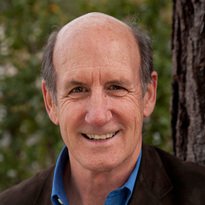 Richard C. Miller, PhD is a clinical psychologist, author, researcher, yogic scholar and spiritual teacher. His work integrates the wisdom teachings of Eastern and Western psychology and philosophy.
Richard is the president of the Integrative Restoration Institute and author of Yoga Nidra: The Meditative Heart of Yoga, and The iRest Program for Healing PTSD.
Richard teaches internationally leading trainings and retreats on enlightened living in daily life, and is a guest teacher on A Daily Dose of Bliss.
WANT MORE LIKE THIS IN YOUR INBOX?

Mental Health and COVID-19
With much of the world going into lock down as a result of COVID-19, one of the biggest global health risks we’re facing right now is mental illness. Loneliness, as a result of social distancing, and stress as a result of the financial implications of lock down and health fears, are very...

Ahiṁsā (non-violence)
Let's dive into the Yoga Sūtras together. Patañjali’s Yoga Sūtras are an ancient yogic text, and a practical guide to self-understanding and enlightenment (as we saw in this article). They outline eight limbs for achieving the goal of yoga, including the yamas, niyamas, āsana, prāṇāyāma,...

Eight Limbs of Yoga
It is thought that Patañjali was an ancient sage who wrote down the vedic knowledge of the time into sūtras, so they could be handed down orally from teacher to student. These sūtras comprise of a series of experiments or practices that are designed to realise the teachings of Sāṅkhya, teachings...
0 Comments